Select Menu

Random Posts

Powered by Blogger.

Nibiru

NATURAL DISASTERS

EARTH CHANGES

EARTHQUAKES

SECRET

Planet x

Botton

More Future Maps

The following regional maps are from the Future Map of the World as provided by Gordon-Michael Scallion and his organization, the Matrix Institute. Please visit the Matrix Institute store
for information on how to purchase any of these maps. In order to 
honor the work and copyright of Mr. Scallion, these maps are only being
provided in their low resolution form.
Future Map of Europe

Future Map of Europe #2

Future Map of Asia

Future Map of Asia #2

Future Map of China

Future Map of South America

Future Map of Australia

Future Map of Indonesia

Future Map of Africa

Future Map of United States
- - - -


- - -


- -


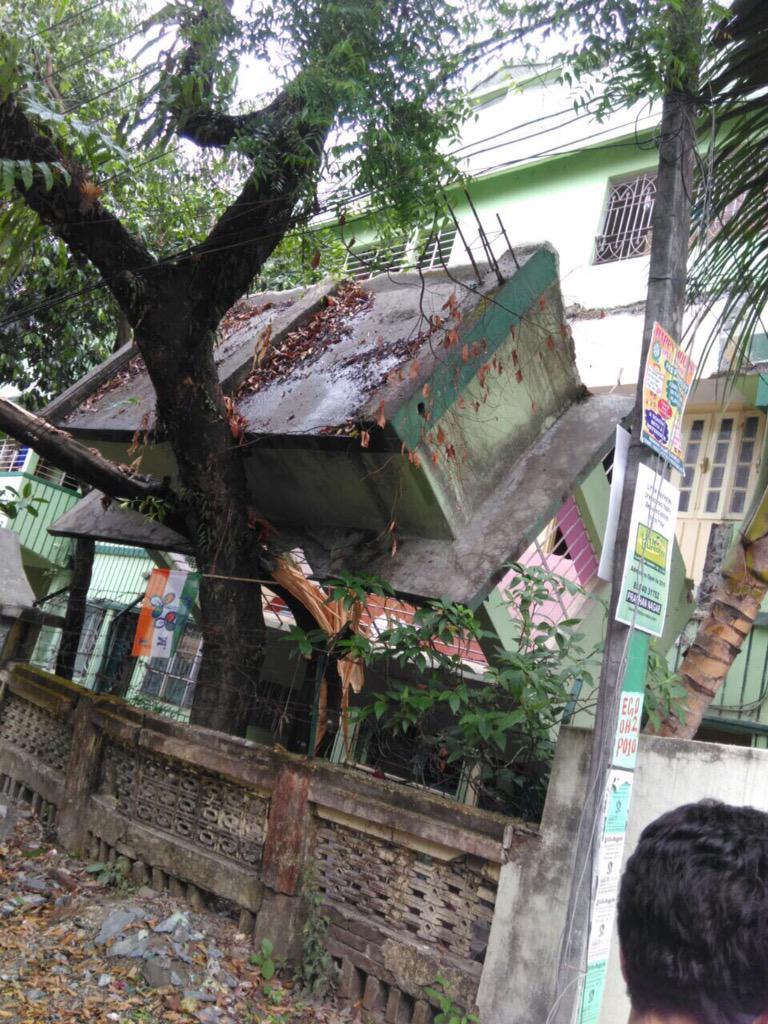
A powerful, 7.8-magnitude earthquake shook Nepal's capital and the densely populated Kathmandu Valley before noon Saturday, collapsing houses and leveling centuries-old temples in the worst temblor in the Himalayan nation in over 80 years. (April 25) AP More than 700 people were killed Saturday in a powerful earthquake that rocked the Himalayan nation of Nepal, leveling homes and centuries-old temples and triggering avalanches, according to the Ministry of Home Affairs. At least 688 people were confirmed dead in Nepal, according to the police. Another 20 were killed in India, six in Tibet and two in Bangladesh. Two Chinese citizens died at the Nepal-China border. Given the scale of the destruction, the death toll is almost certain to rise, said Home Ministry official Laxmi Dhakal.

The magnitude 7.8 earthquake struck before noon about 50 miles northwest of Katmandu in an area that the U.S. Geological Survey calls one of the most seismically hazardous regions on Earth. It is at the spot where the India plate collides with the Eurasia plate in a process that has created the towering Himalayas.
The quake, which was felt as far away as Lahore in Pakistan, Lhasa in Tibet, and in Dhaka, Bangladesh, was followed by some 15 aftershocks, including one registered as magnitude 6.6. Pushpa Das, a laborer, ran from the house when the first quake struck but could not escape a collapsing wall that injured his arm.

Twitter | @ish_aana
ईशान on Twitter
"It was very scary. The earth was moving … I am waiting for treatment but the (hospital) staff is overwhelmed," he said, gingerly holding his right arm with his left hand. As he spoke dozens of more people showed up with injuries, mostly from falling bricks. The initial death toll was issued by Nepal's Ministry of Home Affairs, CNN reports, and appeared certain to rise as authorities gathered information from hard to reach areas.

Twitter | @quizderek
Derek O'Brien on Twitter
India's Prime Minister Narendra Modi called a meeting of top government officials to review the damage and disaster preparedness in parts of India that felt strong tremors. Pakistan Prime Minister Nawaz Sharif offered "all possible help" that Nepal may need. A senior mountaineering guide, Ang Tshering, said an avalanche swept the face of Mt. Everest after the earthquake, and government officials said at least 30 people were injured. Tshering of the Nepal Mountaineering Association said the avalanche apparently occurred between the Khumbu Icefall, a rugged area of collapsed ice and snow, and the base camp where most climbing expeditions have their main camps. While details are unclear with communications limited to the Everest region, Tshering said the avalanche did not appear to have hit the base camp itself. As the ground began to shake, several buildings collapsed in the center of the capital, the ancient Old Kathmandu, including centuries-old temples and towers, said resident Prachanda Sual. Among them was the Dharahara Tower, one of Kathmandu's landmarks built by Nepal's royal rulers in the 1800s and a UNESCO-recognized historical monument. It was reduced to rubble and there were reports of people trapped underneath. The Kathmandu Valley is densely populated with nearly 2.5 million people, and the quality of buildings is often poor. Dhany Osman, an editor with The Straits Times of Singapore said he was at Kathmandu's Tribhuvan International Airport when the quake struck. "As bits of the ceiling began to fall, passengers who were waiting for their flights began to panic and started running out of the terminal, with some tripping over each other," he writes. "Despite the nearest exit door being just 10 (yards) away, a group of Nepali men smashed open a glass panel and climbed out of it. I tried telling people around me to calm down but they kept shoving each other to get out." While the extent of the damage and the scale of the disaster are yet to be ascertained, the quake will likely put a huge strain on the resources of this poor country best known for Everest, the highest mountain in the world. The economy of Nepal, a nation of 27.8 million people, is heavily dependent on tourism, principally trekking and Himalayan mountain climbing. Robin Trygg, a climber, was in a base camp on the Cho Oyu mountain at an altitude of 5,600 meters (18,480 feet) when he felt the quake. "We were sitting in the tent and drinking tea when all of a sudden the earth began shaking. We didn't understand what happened," he told the Swedish news agency TT by telephone. In Kathmandu, dozens of people were gathered in the parking lot of Norvic International Hospital, where thin mattresses were spread on the ground for patients rushed outside, some wearing hospital pajamas. A woman with a bandage on her head sat in a set of chairs pulled from the hospital waiting room. Doctors and nurses had hooked up some patients to IV drops in the parking lot, or were giving people oxygen. The U.S. Geological Survey revised the magnitude from 7.5 to 7.9 but then lowered it to 7.8. It said the quake hit at 11:56 a.m. local time (0611 GMT) at Lamjung. It was the largest shallow quake since the 8.2 temblor off the coast of Chile on April 1, 2014. An earthquake's power increases by 10 times with each increase in the number of its scale. A magnitude 7 quake is capable of widespread and heavy damage while an 8 magnitude quake can cause tremendous damage. This means Saturday's earthquake — the same magnitude as the one that hit San Francisco in 1906 — was 22 times more powerful than the 7.0 quake that devastated Haiti in 2010. A Swedish woman, Jenny Adhikari, who lives in Nepal, told the Swedish newspaper Aftonbladet that she was riding a bus in the town of Melamchi when the earth began to move. "A huge stone crashed only about 20 (yards) from the bus," she was quoted as saying. "All the houses around me have tumbled down. I think there are lot of people who have died," she told the newspaper by telephone. Melamchi is about 30 miles northeast of Kathmandu. Nepal suffered its worst recorded earthquake in 1934, which measured 8.0 and all but destroyed the cities of Kathmandu, Bhaktapur and Patan. Contributing Associated Press
- - -


KATHMANDU, Nepal (CNN) — A 7.8 magnitude earthquake centered less than 50 miles from Kathmandu rocked Nepal with devastating force early Saturday, killing at least 77 people — and probably more — in Nepal’s capital city, authorities said.
 
Historic buildings in Kathmandu lay in rubble on the ground. The injured were being treated outside hospitals in chaotic scenes. Residents, terrorized by a seemingly endless series of aftershocks, huddled outdoors.
The death toll was reported by Laxmi Dhakal, a spokesperson for Nepal’s Ministry of Home Affairs. But given that the rescue effort is still in its early stages and that people in outlying areas may well have been affected, as well, it seems probable that the number will rise.
And Kathmandu, which sits in a valley surrounded by the Himalayas, has a population of 1 million people.
Some people who experienced the quake spoke by telephone with CNN, describing scenes of chaos, fear and suffering.
CNN’s Manesh Shrestha said he saw five bodies at a hospital to which he walked to seek treatment for his own injuries. People with severe injuries were lying outside, with doctors administering CPR to at least one person, Shrestha said.
“It’s quite chaotic,” he said by phone. “People are wailing, crying.”
Shrestha, who needed stitches, was turned away because other people were in more dire need of care. He said he saw people with broken bones and severe head injuries.
Avalanches hit Mount Everest, sending mountaineers running for cover.
“Everest base camp huge earthquake then huge avalanche from pumori,” Twitter user Alex Gavan said. “Running for life from my tent. Unhurt. Many many people up the mountain.”
The quake, which struck at 11:41 local time (05:51 GMT). occurred at a depth of 9.3 miles, which is considered shallow and more damaging than a quake centered deeper under the earth’s crust. It was reported by people in the area as having lasted a very long time. On person said he felt as if he were on a ship in rough seas.
The U.S. Geological Survey had at first rated the temblor at 7.5 magnitude but later upgraded the strength. It reported aftershocks of 6.6 and 5.1 magnitude, among many others others.
In all, the USGS said, at least 15 aftershocks of magnitude 4.5 or greater had been felt in Nepal so far.
One witness told CNN by phone that people were gathered outdoors in fear. Another said via Facebook that power was out and people were listening for news on their car radios.
“We are scared and waiting for the tremors to end,” Shiwani Neupane said on Facebook chat from Kathmandu. “We are all sitting outside because there is more news of another quake.
“There is no power and families are listening to the FM radio inside their cars,” Neupane said. “News of multiple building collapses. I’ve seen many cracked walls and roads and buildings. The Dharara was packed with people a while ago. There are police everywhere trying to move rubble to make space on the roads for ambulances. Everyone is very scared.”
People experienced quake as ‘severe’ to ‘violent’
The force of the quake was said by people who contacted the USGS to be from “severe” to “violent,” nearly the highest rating on the intensity scale. Tremors were felt as far as New Delhi, more than 200 miles away in neighboring India. An official said they were felt there at magnitude 5.0.
The shaking was rated as “strong” to “severe” on the USGS ShakeMap. CNN sister network CNN-IBN reported that roads in the area were out.
Kanak Masni, a journalist in Kathmandu, told CNN by phone that a historic building in Kathmandu called the Dharahara — also known as the Bhimsen Tower — had tumbled down. The building, built in 1832, was nearly 63 meters (207 feet) tall and provided visitors with a panoramic view of of the Kathmandu valley.
Masni told CNN by telephone that this appeared to be “the most massive earthquake to hit central Nepal since 1934.” In that quake, which was 8.0 magnitude and centered near Mount Everest, more than 10,000 people were reported killed.
IBN reporter K. Dhiksit looked out his window in Kathmandu and saw the collapsed walls of many buildings. As he watched, an aftershock rattled the street. He heard “big booming sounds,” he said, and saw people fleeing into the streets.
Photos of caved-in and toppled buildings appeared on social media.
India’s Prime Minister Narendra Modi said in a tweet, “We are in the process of finding more information and are working to reach out to those affected, both at home & in Nepal.”
- -

Wellington - A magnitude-5.7 earthquake centred in New Zealand's scenic Marlborough Sounds at the top of the South Island broke windows Saturday in the capital, Wellington, police said.

There were no serious reports of damage, but Radio New Zealand said windows in a Wellington harbourside office building were broken and some residents reported items shaken off shelves.

Seismologists at the state GNS Science organization said the quake, centred 40 kilometres west of Wellington at a depth of 60 kilometres, was widely felt at the top of the South Island and the bottom of the North Island.

GNS said it was the biggest quake in the Marlborough region for 45 years.

New Zealand is one of the most earthquake-prone nations on earth. GNS said it records an average of 26 quakes between magnitude 5 and 5.9 a year.

- -