Random Posts
Powered by Blogger.
Nibiru
NATURAL DISASTERS
EARTH CHANGES
‹
›
EARTHQUAKES
SECRET
Planet x
Botton


Iskander missile
Russia proceeds from the necessity to maintain its strategic defense potential, says Russia’s Ambassador to NATO, Dmitry Rogozin.
Russia’s primary interest is in protecting its citizens, says the NATO envoy.
“We cannot afford to trade on the security of our citizens,” Rogozin said. “So if anyone puts an eye on it or casts a doubt on it, counter measures should certainly be worked out. And today the president named those measures.”
Rogozin went on to predict that there would be some tough talking during the forthcoming meeting of the NATO-Russia Council on December 8.
“Our colleagues from NATO will have to respond to the question: Why, if you call Russia a partner, are you building the potential to undermine Russia’s security?”
Meanwhile, former commander of the missile attack prevention army Lt. Gen. Nikolay Rodionov said the measures voiced by President Medvedev are capable of neutralizing the threats resulting from the deployment of the American missile defense system, told Interfax.
These measures “are aimed at wrecking the US plans to strike Russian intercontinental ballistic missiles deployed in the European parts of the country,” he said. “At the same it, it is a signal to our western partners to do everything possible in order to avoid a new arms race, which is inevitable given the implementation of US missile defense plans.”
Rodionov noted that when speaking about the deployment of strike systems in Russia’s west and south, Medvedev “undoubtedly” meant Iskander missile systems – “a high-precision weapon” which is “practically invulnerable to air defense systems.”
Finally, commenting on President Medvedev’s statements, NATO’s official representative in Russia, Oana Lungescu, said that the alliance’s proposal to discuss ways of cooperation in the AMD issue remains in force.
However, President Medvedev’s announcement does not mark the end of the so-called “reset” in Russia-US relations, believes the chairman of the Federation Council’s International Affairs Committee, Mikhail Margelov.
“I can state this as a participant of the meeting between the [Russian and US] presidents in Honolulu,” he told Interfax.
“The president has presented retaliatory steps which our country has to make because of the US refusal to provide legally-binding guarantees that the deployment of the American missile defense shield in Europe will not be aimed against Russia,” Margelov said.
The official noted that that despite disagreements, the two countries are not enemies. He observed that there have been differences in approaches when it comes to security issues “even between closest allies.”
America says it is concerned with protecting its own homeland, yet it is deploying missiles along the Russian border. According to political analyst Igor Khokhlov, this policy of surrounding Russia and the former Soviet Union with missile bases actually dates back to the 50s and 60s.
He added the United States has pulled the rug out from under its European allies by surrounding the Russian territory with missile bases.
“Russia has adequate responses, especially with its new generation of missiles like Iskander, which can be put in Europe and will endanger the European allies of the US. The European allies of the US, who joined this program, are putting their own populations at risk because before these events there was no danger from Russia, and now Russia has a response to America putting its missile bases around its territory,” he said.
Glyn Ford, a former Member of the European Parliament, told RT Europe has an obligation to moderate any US plans that fail to take account of Russia’s genuine security concerns over the ABM project.
“I think the European Union and the European members of NATO have a responsibility to press the United States to actually try and come to some accommodation with Russia on this matter. The two things would be – either we do not deploy or we provide information to Moscow that enables them to be assured that if you want a change in the balance of forces, it is comparatively small.”
Russian political analyst Dmitry Babich told RT the timing of President Medvedev’s statement was not accidental.
“There are several reasons why the statement was made now. First, we should not forget that we are in the midst of an election campaign right now in Russia and also the American electoral campaign, so probably Russia could view this as the last moment when something can be renegotiated on missile defense and on the START treaty,” he stated.
According to Babich, the Republican opposition in the US will push Obama to be tougher on Russia.
“They have already threatened to renegotiate the START treaty. They think that it is too beneficial for Russia, though I would argue that it is correct,” he added.
Europe seems now to be directly involved in the row between Moscow and Washington on missile defense. The Iskander missiles could be directed towards Europe as Medvedev has threatened, but as professor Nina Bashkatov, from the Liege University, told RT, this is between Russia and the United States.
“Europe should have no political reason to fear that those countries could be slipping in such hostility that war can be envisaged, let alone a nuclear war declared,” she said.
Despite the fact that the US calls for an anti-missile defense system, Moscow’s concern is that Russia will be totally encircled and that it has the potential be used as an offensive system. According to political analyst Aleksandar Pavic, verification is very hard in these things.
“They can very easily and quickly be turned into offensive systems. We have to remember in 2002 US president George Bush unilaterally withdrew from the anti-ballistic missile treaty. This was the treaty that kept clear stability, not just in Europe but throughout the world for more than 30 years. Such threats actually increase the chances of a nuclear war or even accidental nuclear war. And the further way we get from that doctrine, which assured the peace, the more dangerous the whole international environment is becoming,” he stressed.
Alice Slater from the Nuclear Age Peace Foundation told RT it is unlikely the situation will lead to a new Cold War style arms race.
“I hope somebody will have some good sense because basically the US is a crumbling empire – it is in debt, it cannot fund its roads, it has wasted its national treasure on the military, and it is almost like it has to have a total shift into the 21st century. War is not the answer anymore and there are many problems America has to deal with. Hopefully this is a wake-up call,” she said.
Source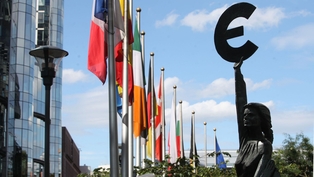 Italy had to pay record rates to raise €10bn this morning, while France and Germany warn that a blow-out in its giant debt mountain would signal "the end of the euro."

(CNN) -- Syria's failure to respond to Friday's deadline for it to allow Arab League observers into the country to monitor the government's response to civil unrest moves the country a step closer to economic sanctions from its neighbors, a senior Arab League diplomat said.
"The Syrians responded with more requests to amendments to the protocol; they did not reject or accept," he said.
The finance and economic ministers of the Arab League will meet Saturday to draft economic sanctions that will be discussed Sunday by the Arab League's foreign ministers, said the diplomat, who did not want to be identified because of the sensitivity of the negotiations.
These could include halting dealings with Syria's central bank and airlines, the official said.
Turkish Foreign Minister Ahmet Davutoglu said Syria risked international isolation if it continued on its present path -- and, that the bloodshed resulting from its violent crackdown on pro-democracy protests could not be tolerated.
"Syria has to make a decision," he said in Istanbul alongside his Italian counterpart, Giulio Terzi. "It will either continue this crackdown policy against its people and become isolated more and more, or it will say yes to this well-intentioned Arab League proposal, sign this protocol and observers will monitor the situation on the ground by going to all Syrian cities."
Since March, protesters in cities across the country have been demanding al-Assad's ouster and democratic elections.
The state-run Syrian Arab News Agency said the move by Arab League diplomats meeting in Cairo was unprecedented. The league was rejected by the Syrian people as "a tool for foreign interference," it said.
"The sanctions include stopping air flights, trade exchanges and monetary dealings with the Syrian government and freezing its assets, which harms the interests of the Syrian people," it reported.
Syria's membership in the 22-country Arab League was suspended this month after President Bashar al-Assad's regime ignored demands to end its crackdown on citizens.
Adding to the pressure on Damascus, the United Nations Committee Against Torture said Friday it is "deeply concerned about gross and pervasive human rights violations in Syria," which are allegedly taking place "in a context of impunity."
"Of particular concern are reports referring to children who have suffered torture and mutilation while detained; as well as cases of extrajudicial, summary or arbitrary executions; arbitrary detention by police forces and the military; and enforced and involuntary disappearances," said Claudio Grossman, who heads the expert panel.
Reliable sources indicate the abuses "are allegedly conducted under direct orders from public authorities, at their instigation or with their consent or acquiescence," Grossman said.
The committee has asked Syria to provide a special report by early March indicating it is abiding by its obligations under the U.N. Convention against Torture, to which Syria is a signatory.
Earlier Friday, Moscow -- a historic ally of Damascus -- warned against international military intervention in Syria and described it as an "absolutely unacceptable" solution to ending the government crackdown against protesters.
Russian Foreign Ministry spokesman Alexander Lukashevich said the Syrian people must be left to decide their own fate.
Human rights issues should not be used as a justification for action by the West, he said.
"Under no circumstances must human rights issues be used as a pretext for interfering in the internal affairs of a state, in this particular instance, Syria," Lukashevich said, quoted by the Russian news agency Interfax.
"A scenario involving military intervention in Syrian affairs is absolutely unacceptable for us."
Russia, a major arms supplier to Damascus, blocked a U.N. Security Council resolution last month that would have condemned the Syrian response to the demonstrators and called for an immediate end to the government clampdown on the opposition.
It abstained from voting on another resolution that was passed Tuesday by a humanitarian committee of the United Nations' General Assembly.
Al-Assad has resisted mounting calls for his resignation in recent weeks as international outcry over the Syrian violence has intensified.
He says his government is battling armed terrorist groups.
The United Nations says more than 3,500 people have died in the course of an eight-month government crackdown on protests.
Five people died Friday, one of them a child, the Local Coordination Committees of Syria activist group said.
More than 20,000 anti-government protesters gathered in the city of Dael as a child's funeral was held, said the opposition group, which organizes and documents anti-government protests. Power, water and communications to the city had been cut, it reported.
Another opposition group, the London-based Syrian Observatory for Human Rights, said there was heavy gunfire in the streets of Hama from military and security forces.
In Daraa, weapons were fired outside mosques to prevent people demonstrating after Friday prayers, the group said.
The LCC said at least 35 people died Thursday in clashes with security forces.
CNN cannot independently verify the reports because the government
Rome (Financial Times) -- Italy's borrowing costs shot higher on Friday as Rome was forced to pay euro-era high interest rates to investors in what analysts called an "awful" auction of short-term debt.
Yields on two-year bonds jumped above 8 per cent after an auction of this debt and six-month bills raised the full targeted €10bn but at the cost of sharply higher yields.
The European Central Bank on Friday was reportedly intervening in the sovereign bond market again, buying Italian and Spanish debt in an effort to limit the unsustainable rise of interest rates.
"We're witnessing a slow-motion collapse of the world's third-largest bond market. It is agonising to watch," Nicholas Spiro, a London-based sovereign risk analyst, said.
The auction will add to pressure on Mario Monti, Italy's new prime minister leading a government of technocrats, to announce details of his plans to reduce Italy's budget deficit and promote economic growth as Italy hovers on the edge of renewed recession. After just a week in office, Mr Monti, former European commissioner, has only spoken in general terms of what he intends to do and has still not appointed his full team.
A cabinet meeting on Friday had been expected to announce names of deputy ministers and under-secretaries, but ministers emerging from the meeting said the issue was not discussed. Reports and comments from politicians suggest that Mr Monti has been blocked in his efforts to get the main political parties inside his government with senior posts.
Pierferdinando Casini, leader of the centrist UDC party, told reporters that the officials to be appointed by Mr Monti over the next days would not be politicians as this "would be in contradiction with the form [of the government]".
Friday's sale came at a much higher cost to Italy's treasury than previous sales, as investors demanded a yield of 7.814 per cent on the two-year bond, up from 4.628 per cent at the previous sale of this maturity in October.
The six-month bill demanded a yield of 6.504 per cent -- a euro-era high -- up from 3.535 per cent in the October sale.
Demand was modest, with the shorter-term debt sale covered 1.47 times and the two-year auction covered just 1.59 times.

Berlin (CNN) -- German Chancellor Angela Merkel and French President Nicolas Sarkozy agreed on Thursday to put forward an overall plan to change the EU's treaties.
"This is going to restore lost credibility", Nicolas Sarkozy said.
Merkel and Sarkozy want to prevent the stability and growth pact's further abuse, they said. "Countries that ignored the law were not punished in the past -- Germany amongst them. Now we are paying the price," said Merkel.
"We need to correct the fundamental floors in the construction of the eurozone. The situation is not easy -- trust has been lost. And that is the reason why we, Germany and France, want to work on treaty change for the eurozone."
The politicians did not specify the treaty changes, but said they will inform the public of the details ahead of the next EU summit on December 9.
Merkel said she wanted the European Central Bank (ECB) to remain independent. "We have expressed our confidence in the ECB," she said.
New Italian Prime Minister Mario Monti was also invited to the meeting. The Italian economy is the third largest in the eurozone; a default on Italian debt would likely exact a heavy toll on Europe. Italy has been struggling to tackle its debt crisis for years.
While Merkel and Sarkozy welcomed Italy's willingness to face tough reforms, the use of eurobonds was disputed. Mario Monti said: "Eurobonds might contribute to stability" within a stricter fiscal framework. But Angela Merkel rejected their use.
"I have not changed my opinion", she said. On Wednesday she made clear her opposition to eurobonds in a speech to the German Bundestag or parliament. The same day, the European Commission unveiled a plan detailing options for so-called eurobonds.
Some see eurobonds as a way out of the debt crisis, because they would effectively pool the debt of the 17 eurozone countries. But stronger eurozone countries are concerned about becoming liable for the debt service payments of entire regions without having a say in their future fiscal actions and policies.
Italian Premier Monti said the leaders of Germany and France had accepted his invitation to meet in the coming days in Rome to continue talks about Italy's economic future.
According to Sarkozy, he and Merkel are in constant contact with each other to manage the euro crisis anyway.
"We call each other nearly each day to discuss our different opinions", Sarkozy said.
"Germany has its own culture; France also has its own culture. We both try to understand each other. Or do you believe we would have to talk on a daily basis if we would both agree on everything?" he asked journalists.cnn.com